What is ChatGPT? Exploring AI Chatbots and How They Work

29 July, 2024
Have you ever imagined having a real conversation with a computer? Not just clicking buttons or filling forms—but actually talking and getting intelligent responses instantly? That future is already here.
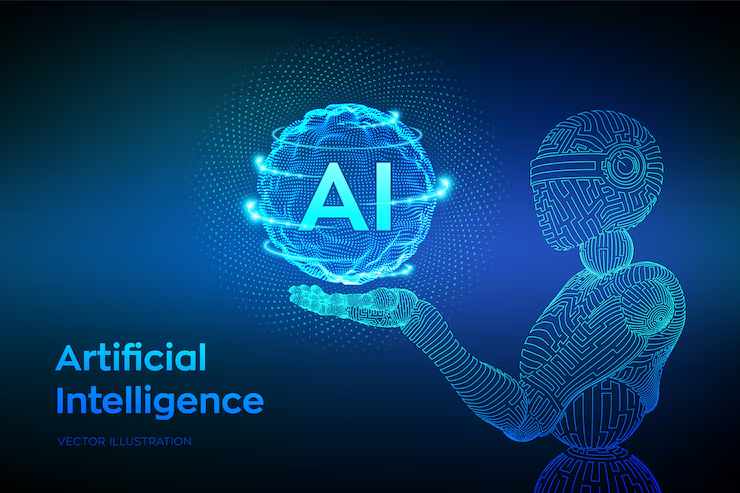
AI chatbots are transforming how we interact with technology. From answering customer queries to helping students learn faster, these intelligent systems are becoming an essential part of our daily digital experience. Among them, ChatGPT stands out as one of the most advanced conversational AI tools available today.
In this blog, we’ll explore what ChatGPT is, how AI chatbots work, and why they are revolutionizing industries worldwide.
What is an AI Chatbot?
An AI chatbot is a software application designed to simulate human conversation using artificial intelligence. Unlike traditional chat systems that rely on predefined scripts, modern AI chatbots understand user input, process it, and generate meaningful responses.
Where You See AI Chatbots:
- ✔ E-commerce websites (product queries, order tracking)
- ✔ Customer support systems
- ✔ Banking and finance apps
- ✔ Educational platforms
- ✔ Healthcare assistance
For example, imagine browsing an online store late at night. You have a question about product size or delivery. Instead of waiting for human support, a chatbot instantly responds and solves your query—saving time and improving user experience
What is ChatGPT?
ChatGPT is an advanced AI chatbot developed by OpenAI. It is powered by a large language model (LLM) that understands and generates human-like text.
Think of ChatGPT as:
- ✔ A virtual assistant
- ✔ A content writer
- ✔ A coding helper
- ✔ A customer support agent
All in one.
It has been trained on massive amounts of text data, allowing it to:
- ✔ Answer questions
- ✔ Generate content
- ✔ Provide recommendations
- ✔ Assist with problem-solving
How Does ChatGPT Work?
At its core, ChatGPT works using Natural Language Processing (NLP) and machine learning.
Step-by-Step Process:
1. Input Understanding
When a user types a question, ChatGPT analyzes the text to understand intent and context.
2. Pattern Recognition
It compares the input with patterns learned during training from vast datasets.
3. Response Generation
Based on probability and context, it generates the most relevant and human-like response.
4. Continuous Learning
While it doesn’t learn in real-time from individual chats, its models are continuously improved through updates and training.
Key Features of ChatGPT
1. Human-Like Conversations
ChatGPT can hold natural, flowing conversations, making interactions feel realistic.
2. Multi-Purpose Usage
It can:
- ✔ Write blogs and emails
- ✔ Generate code
- ✔ Answer academic questions
- ✔ Create marketing content
3. 24/7 Availability
Unlike human agents, ChatGPT is always available, making it ideal for businesses.
4. Scalability
It can handle thousands of users simultaneously without delays.
Applications of AI Chatbots in Real Life
1. E-Commerce
AI chatbots help customers:
- ✔ Find products
- ✔ Get recommendations
- ✔ Track orders
2. Education
They provide:
- ✔ Personalized learning
- ✔ Instant doubt resolution
- ✔ Study assistance
3. Customer Support
Businesses use chatbots for:
- ✔ FAQs
- ✔ Complaint handling
- ✔ Ticket generation
4. Healthcare
AI chatbots assist in:
- ✔ Basic symptom checking
- ✔ Appointment scheduling
- ✔ Patient guidance
5. Digital Marketing
Chatbots are used for:
- ✔ Lead generation
- ✔ Customer engagement
- ✔ Automated responses
Benefits of Using ChatGPT and AI Chatbots
1. Instant Responses
Users get answers immediately, improving satisfaction.
2. Cost Efficiency
Businesses reduce the need for large support teams.
3. Improved User Experience
Smooth and quick interactions enhance customer engagement.
4. Increased Productivity
Automation allows teams to focus on more complex tasks.
5. Personalization
AI can tailor responses based on user behavior and preferences.