OUR LATEST BLOGS
We wanted to take a moment to invite you to check out my blogs. We've been working to create contents that I think you might find interesting or informative. If you have a few minutes to spare, we would be thrilled if you could give it a read and let me know what you think.
Google Spam Update 2026: Impact on Website Rankings & SEO
For sites adhering to the new guidelines of Google, the spam update in January 2025 should not impact much. For websites violating the spam policies of Google, these websites may rank lower in the search results, or even delete them from search results. The search engine company encourages webmasters to review their spam policies and make necessary corrections to avoid any penalties. Spam policies cover a wide range of issues, from low-quality content to link spam and abusive practices involving AI-generated or automated content. This change will affect sites that would have used spam links to artificially raise their rankings on Google. If Google's systems identify them harmful and unnatural links, then the ranking benefit that may have been earlier will be lost. Therefore, websites accused of link manipulation or other forms of spam tactics are likely to drop in rank following this update. Read More about Google Spam Update 2026: Impact...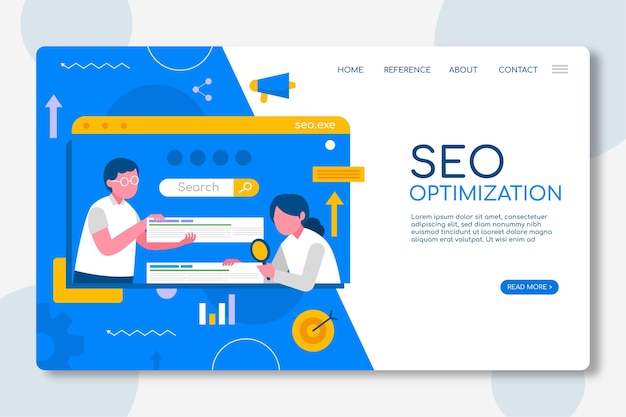
Location Pages SEO: Boost Local Search Rankings & Visibility
Location pages help the search engines identify the areas that you cater to and can significantly boost your ranking in local search results. In the case of users searching for products or services around their location, search engines rank businesses with location pages relevant to their search queries first. In addition, location pages carry important information regarding your business's address, contact details, operation hours, and directions. That is to say, such details help users in finding your business easily, giving credibility and reliability to your brand. Besides that, location pages SEO can also target specific keywords regarding your business and location so as to appear on related search queries. Location pages are one of the most effective tools one can utilize to maximize their visibility in local search results. By employing the correct seo location pages strategy and adequately optimizing your location pages, you can attract more targeted traffic, increase brand visibility, and drive more customers to your business. It is therefore important to focus on giving pertinent, location-specific content, optimize elements on-page, and further build an online presence through local citations and backlinks. With a well-executed location page strategy, you’ll be well on your way to dominating local search results and growing your business. Read More about Location Pages SEO: Boost Local...
How Social Media Marketing Has Evolved Over Time
Social media marketing has evolved quite a bit since its emergence. The business first used social media for mass promoting products and services, but as the social media platform developed, so did the pressure to change their marketing strategies to advance in line with the times. Presently, social media marketing entails cultivating fruitful connections with consumers and developing relevant material for their audience. One of the most visible transitions that social media marketing is going through is visual content. Businesses can now create visually appealing content, such as those found in Instagram and Facebook, which capture their audience's attention. Social media marketing has moved from just being a product-pushing activity to being a memorable experience for the customer. The influence marketing is yet another important transformation that has shaped the social media marketing landscape. Companies now have an influential way to connect with the right people. Through an influencer, a business can reach a desired audience it aims to get a hold of, and followers will trust them and believe whatever recommendations they will provide. Read More about How Social Media Marketing Has...
What is Meta AI? How It Transforms Content Creation & Marketing
It is technology that uses AI algorithms to aid in content creation. Meta AI wants to help content creation be more efficient and effective by automating some repetitive or time-consuming tasks so creative time is freed up for human writers and designers. There are several ways in which Meta AI can be applied to content creation: Text Generation: Meta AI can create text, such as articles, blog posts, or product descriptions based on specific input or criteria. Content Optimization: Meta AI can optimize the existing content through analysis and then make suggestions on improvement, like keyword optimization or readability enhancements. Design Automation: Meta AI can automate the design process by generating concepts, layouts, and graphics. Data Analysis: Meta AI can analyze data to understand insights and trends that can inform content creation strategies and decision-making. Collaboration: Meta AI can help human writers, designers, and other creators collaborate to work more effectively. Read More about What is Meta AI? How...
How to Use LinkedIn Ads to Target Decision-Makers
LinkedIn, in particular, is a network of professionals who are in the thick of making business decisions. The internet is a pretty noisy place, and if your online presence involves any work on the choppy seas of social media, you can often feel that you are shouting into a world with nobody listening. A carefully thought-out social media strategy that includes LinkedIn ads will mean that the right people can find you exactly when they are looking for you. LinkedIn ads are not similar to the advertising systems that are offered by other social media platforms. Of course, there is some learning curve involved because of the intricacy of the framework; however, LinkedIn advertising can be very valuable to your digitally marketing strategy because of the people it can reached for you. LinkedIn is, at its core, a social media platform for professionals - precisely those individuals who are usually responsible for making business decisions! By working with an experienced It company Auksitsolutions you receive a one-stop solution designed according to your needs to make the most of the huge potential of LinkedIn advertising. Read More about How to Use LinkedIn Ads....jpg)
Curious About Open Graph? Here's Everything You Need To Know.
Have you ever heard of Open Graph and wondered what it's all about? Maybe you saw the eye-grabbing previews on social media when someone shared a link and were like, "How do I get my content to look like that?" You're in the right place! Standing out is crucial, and Open Graph SEO might be the game-changer you need. It provides options for a level of new presentation for your content across social platforms. What is Open Graph? Open Graph is a protocol by which you are in control about how your content looks as it gets shared through your social media. Consider these Open Graph tags like a little helper, telling social networks exactly what to display when speaking of your content. It will be the title, image, and description, all of which the Open Graph tags will give your content as rich for visual experience, inviting clicks and engagement. Introduced in 2010 by Facebook, Open Graph has come to be a universally accepted language for websites wishing to splurge themselves on social media. The embedding of specific Open Graph tags within the HTML open graph of your web page makes your content ready for social media. It is key that when someone shares the link, your site catches their attention with an interesting image, attractive title, and descriptive snippet. This improves your content’s visibility and increases the likelihood of engagement and traffic back to Using Open Graph for social sharing is about making your content honestly noticed. Here’s how to ensure your social media previews are compelling and irresistibly clickable: Visual Appeal: Choose images that are vibrant and relevant. A captivating image can make the difference between a scroll-past and a click.Compelling Content: Create headlines and descriptions that pique the interest or offer value to users so that they cannot help but click and learn more. Consistency pays: Make sure your Open Graph tags reflect the information correctly on your page; trust your audience. Invite Sharing Place clear call-to-actions on your content pages to ask readers or visitors to share your content. At times, a gentle nudge does pay off to drive more social shares. Read More about Curious About Open Graph? Here's...
7 Best Social Media Post Scheduling Tools to Save Time.
Juggling multiple social media platforms is often a tedious business. But don't you worry, as there are tons of social media post scheduling tools available to optimize your social media marketing and salvage your time. This blog unwraps seven incredible tools that enable you to smoothly schedule and automate your social media content. With these tools, you can easily maintain a consistent online presence and engage with your followers while saving resources for other important areas of your social media post outline. Never has social media management been easier than with these tools! ●Learn how they can make your life easier. 1] Hootsuite 2] Buffer 3] Sprout Social 4] CoSchedule 5] Later 6] MeetEdgar 7] Sendible You can optimize your social media strategy by saving time and increasing your efficiency in managing your digital presence, with the help of seven social media post scheduling tools reviewed below. Compare the functionalities and pricing of each one to find the best business need for your business, and maintain a consistent and engaging social media presence while focusing on other important aspects of your company growth by leveraging these tools. Read More about 7 Best Social Media Post...
Google Spam Update 2026: SEO Impact, Changes & Key Insights
Google rolled out its 2026 spam update on June 20th targeting websites violating its spam policies with the aim of improving the quality of search results. This update was fully deployed on June 27th and has been noted on Google's Search Status Dashboard. Curiously, it overlapped with an indexing bug on the same night, which prompted speculations of a relationship between the two events, although that was not the case. The update continues to be part of a process by Google to continue the fight against spam in forms like low-quality content and manipulative tactics. It is meant to bring users more relevant and credible results in search. This differentiation ensures that good sites are rewarded with an increased rank, while those considered spammy will not benefit from this update. Focus Areas of the Update This update targets sites violating Google's spam policies and is separate from the upcoming site reputation abuse algorithmic update. The rollout took around one week. Google's spam updates typically target the eradication of different types of web spam, such as: Auto-generated Content: Content created to improve search rankings. Manipulative Links: Links that have been bought or sold with the intention of manipulating rankings. Low-Quality Content: Thin, duplicate, or low-quality content that clutters the web. Deceptive Techniques: Removing hidden redirects and other methods to mislead users and search engines. Read More about Google Spam Update 2026: SEO...